
Category: Place · Reading time: 3 min
Luc-sur-Orbieu is not the kind of place that announces itself. There are no signs directing you to it from the motorway. It does not appear on most tourist maps of the Languedoc. It sits quietly in the Corbières — that vast, sun-scorched plateau of limestone, scrubland and ancient vine — and goes about its business with the unhurried confidence of a place that has been there for a very long time.
For Wedgo, a British artist who made his home here, that quietness was the point.
Coming from England — a country where every landscape feels slightly managed, slightly explained — the rawness of the Corbières was a revelation. Here the land has not been tidied. The ruins of Cathar castles still crown the ridgelines exactly where they fell in the thirteenth century. The garrigue grows where it chooses. The Orbieu River runs clear and indifferent through the valley below the village, paying no attention to the centuries that have passed on its banks.
Living inside that landscape changes how you see. And changing how you see changes how you paint.
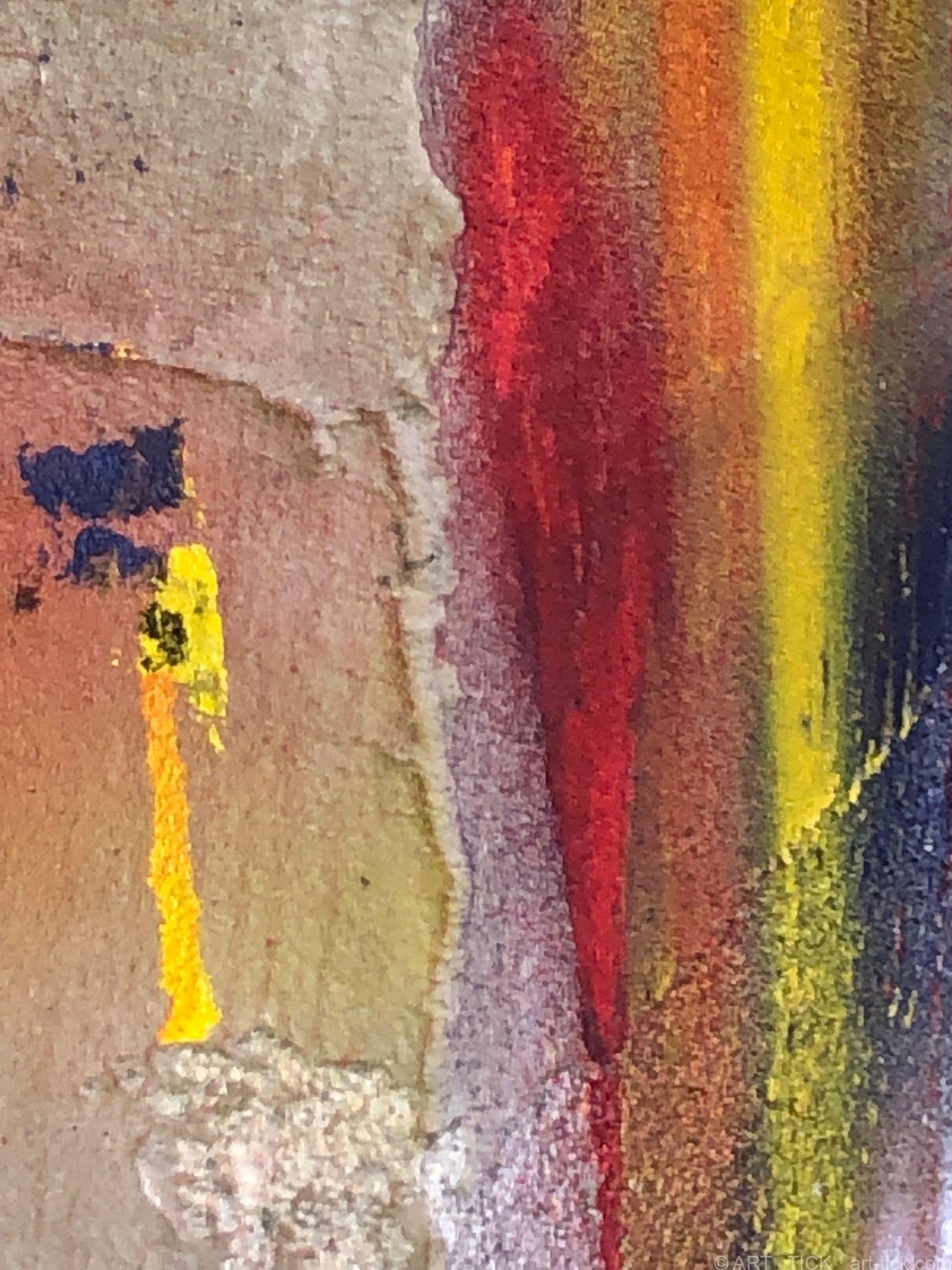
Wedgo’s work is not landscape painting in any conventional sense. You will not find the Corbières hills rendered in his canvases, or the Orbieu catching afternoon light. What you will find — if you look long enough — is something more fundamental: the psychological residue of a life lived in proximity to very old, very uncompromising land.
The darkness in the work. The sudden eruptions of colour. The sense that something is being forced up through the surface from below. These are not compositional decisions made at a desk. They are the consequence of years spent in a place where the ground itself feels charged, where the history is so dense it seems to press against the present, and where the light — that extraordinary Mediterranean light — strips everything back to its essential nature.
What does Luc-sur-Orbieu give a painter? Silence. Resistance. And a kind of clarity that is only possible at a remove from the world.
— Studio Notes, Luc-sur-Orbieu
