# Studio Notes — Journal Articles
### art-tick.com · Jason “Wedgo” Owen
—
## Article 1 — Process
# Working with Resin and Enamel in the Southern Heat
*Category: Process · Reading time: 3 min*
There is a particular quality to the light in the Aude in July. It arrives early and stays late, pressing down on the garrigue with a weight that changes everything — the way the air smells, the way the body moves, and critically, the way paint behaves.
For Wedgo, the Languedoc summer is not a backdrop to his work. It is a collaborator.
Working with acrylic, enamel and resin in temperatures that regularly exceed 35 degrees, the southern heat becomes an active force in the studio. Enamel that might take hours to skin over in an English winter can begin moving and crusting within minutes. Resin, poured across a prepared surface, flows differently — faster, thinner, more willing to find its own path across the canvas before the artist can intervene.
This is precisely the point.
Wedgo’s practice has never been about control. It is about the negotiation between intention and accident, between the mark he sets out to make and the mark the material insists upon. The heat accelerates that negotiation, compressing decisions that might otherwise stretch across an afternoon into a matter of seconds. You commit, or the moment is gone.
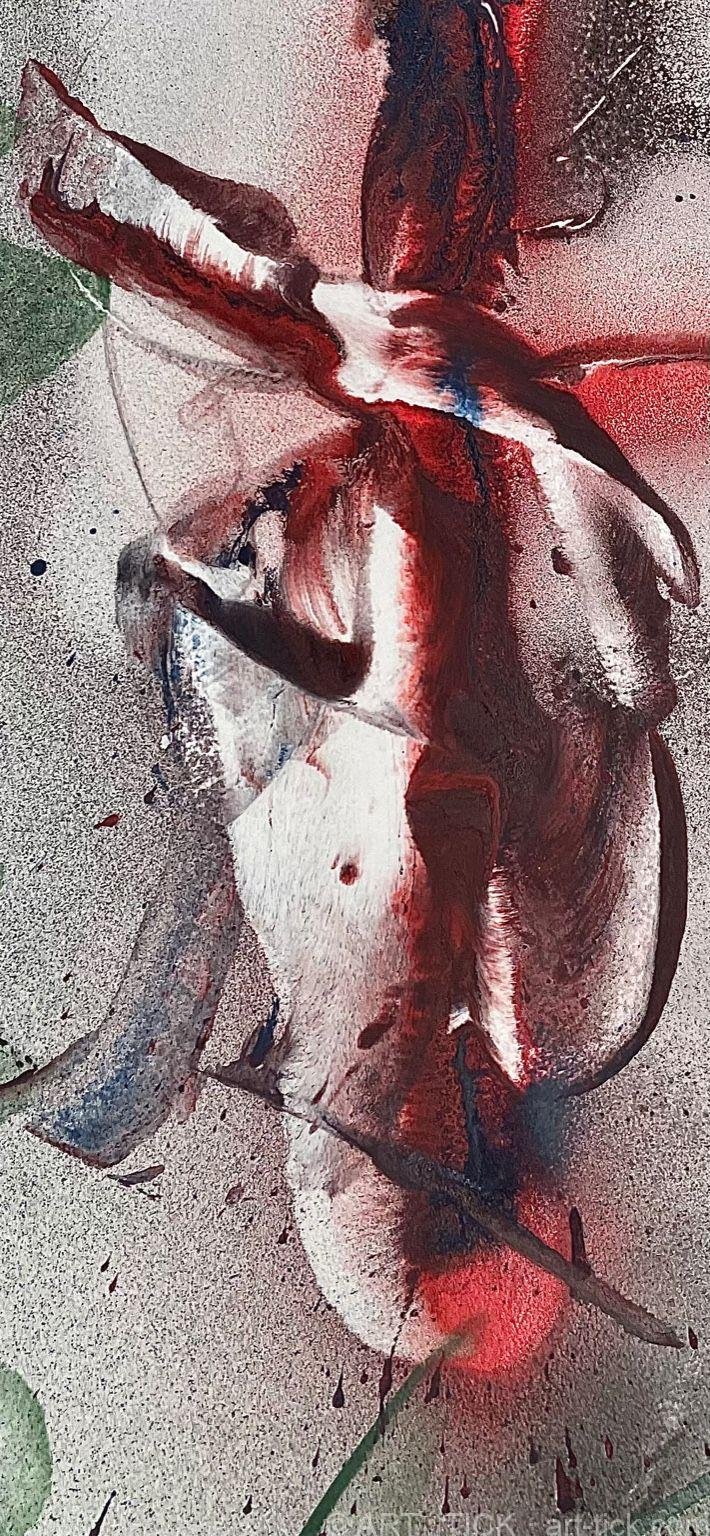
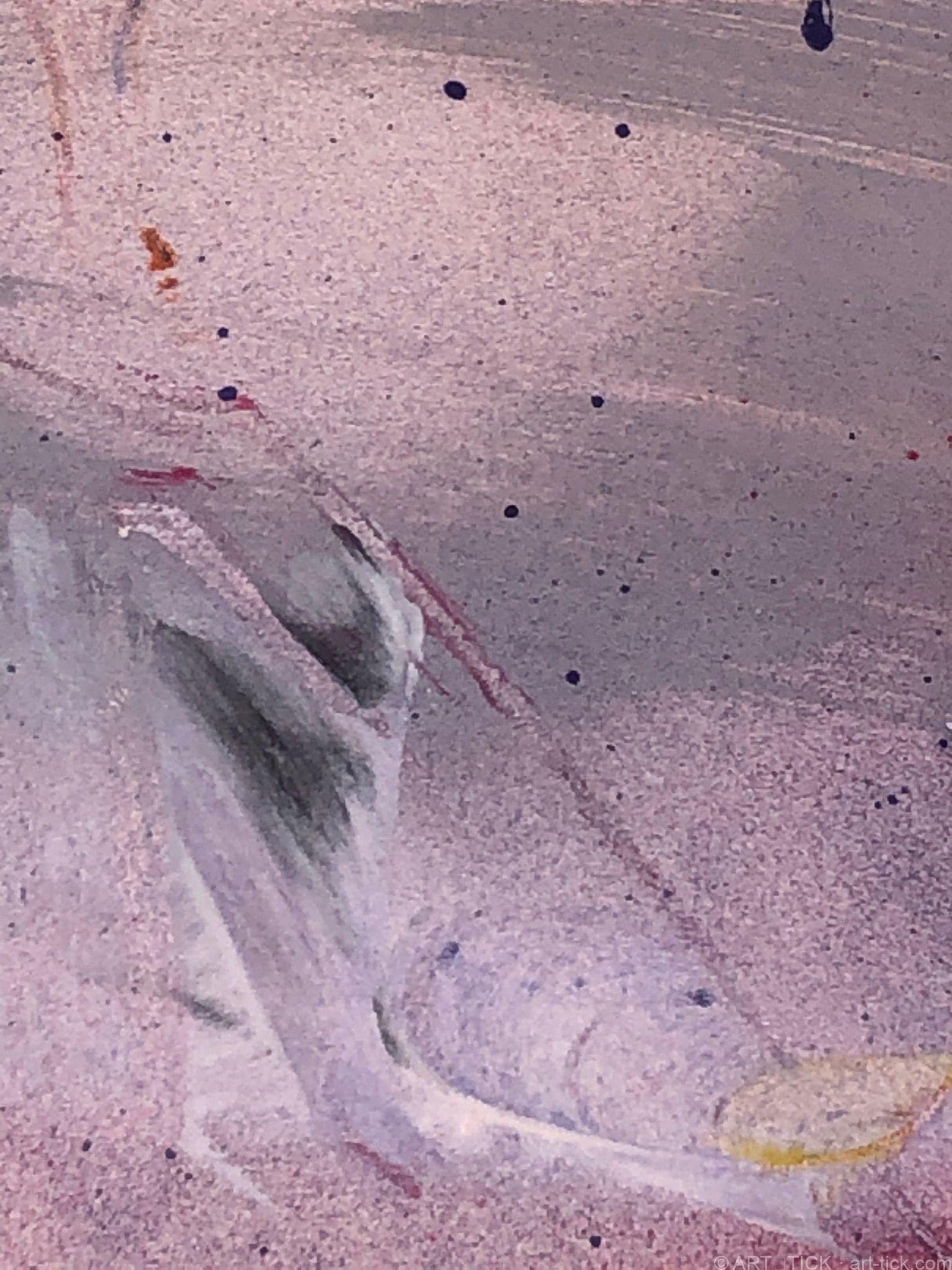
The results carry the evidence of that urgency. Look closely at any of the works in the collection and you will find passages where the enamel has spiked and cracked as it dried faster than expected, where resin has pooled in ways that could not have been planned, where the heat of the day has left its own mark on the surface alongside the artist’s hand.
Some painters would sand those passages back. Wedgo leaves them. They are part of the truth of the work — a record of a specific afternoon in a specific place, where the light was fierce and the paint refused to wait.
That refusal, he has come to understand, is where the paintings come alive.
*— Studio Notes, Luc-sur-Orbieu*
—
## Article 2 — Place
# Luc-sur-Orbieu: What a Village on the Orbieu Gives a Painter
*Category: Place · Reading time: 3 min*
Luc-sur-Orbieu is not the kind of place that announces itself. There are no signs directing you to it from the motorway. It does not appear on most tourist maps of the Languedoc. It sits quietly in the Corbières — that vast, sun-scorched plateau of limestone, scrubland and ancient vine — and goes about its business with the unhurried confidence of a place that has been there for a very long time.
For Wedgo, a British artist who made his home here, that quietness was the point.
Coming from England — a country where every landscape feels slightly managed, slightly explained — the rawness of the Corbières was a revelation. Here the land has not been tidied. The ruins of Cathar castles still crown the ridgelines exactly where they fell in the thirteenth century. The garrigue grows where it chooses. The Orbieu River runs clear and indifferent through the valley below the village, paying no attention to the centuries that have passed on its banks.
Living inside that landscape changes how you see. And changing how you see changes how you paint.
Wedgo’s work is not landscape painting in any conventional sense. You will not find the Corbières hills rendered in his canvases, or the Orbieu catching afternoon light. What you will find — if you look long enough — is something more fundamental: the psychological residue of a life lived in proximity to very old, very uncompromising land.
The darkness in the work. The sudden eruptions of colour. The sense that something is being forced up through the surface from below. These are not compositional decisions made at a desk. They are the consequence of years spent in a place where the ground itself feels charged, where the history is so dense it seems to press against the present, and where the light — that extraordinary Mediterranean light — strips everything back to its essential nature.
What does Luc-sur-Orbieu give a painter? Silence. Resistance. And a kind of clarity that is only possible at a remove from the world.
*— Studio Notes, Luc-sur-Orbieu*
—
## Article 3 — Collecting
# How to Choose and Hang an Abstract Print in Your Home
*Category: Collecting · Reading time: 3 min*
The most common mistake people make when buying an abstract print is choosing it for the sofa.
You know the impulse. You have a grey sofa and you want something with a little warmth, so you find yourself drawn to the oranges and terracottas. Or you have a white wall and you want impact, so you reach for the darkest, most dramatic work in the collection. These are understandable instincts. They are also, almost always, the wrong ones.
The best abstract art does not match your room. It speaks to it — and sometimes argues with it.
**Start with feeling, not colour**
Before you think about where a print will hang, spend time with the work itself. What does it make you feel? Not what does it remind you of, not what does it go with — what does it make you feel? Abstract art operates at a level below narrative. It bypasses the part of the brain that wants to explain things and goes straight to the part that simply responds.
If a work makes you feel something — curiosity, unease, exhilaration, calm — that is the work for you. Colour co-ordination is secondary. The feeling is primary.
**Scale matters more than you think**
A print that looks bold on a screen can disappear on a wall. As a general rule, go larger than you think you need. An A1 print (59 × 84cm) that feels ambitious in the shop becomes, once hung, exactly right. An A3 that feels safe becomes, once hung, a little lost.
If you are unsure, hold a piece of paper the size of your intended print against the wall and live with it for a day. Your instinct will tell you quickly whether it needs to be bigger.
**Give it room to breathe**
Abstract work needs space around it. Resist the temptation to cluster prints together or hang them in busy corners. A single strong work on a plain wall, with nothing competing for attention on either side, will always outperform a gallery wall of smaller pieces.
The wall colour matters less than the breathing room. White walls are classic for a reason, but deep navy, slate grey or warm plaster tones can be equally powerful — sometimes more so, as they push the work forward rather than simply displaying it.
**Light it properly**
If you do one thing after hanging your print, install a picture light or a directional spot above it. The difference between a print lit well and a print lit by overhead ceiling lights is the difference between a gallery and a corridor.
Warm light (2700–3000K) brings out the depth in textural work. It is worth the effort.
**Trust the work**
Abstract prints from Wedgo’s collection are not decorative objects in the conventional sense. They are records of specific moments — afternoons in the Languedoc heat when paint moved faster than intention, when accident became decision, when the work found its own form.
They will do the same in your home. Give them a wall, give them light, and trust them to do the rest.
*— Studio Notes, art-tick.com*
—
*All three articles are ready to publish as WordPress blog posts. Add Jason’s direct quotes to Article 1 when received. Each article targets different search terms: Article 1 (abstract art process, resin painting), Article 2 (Languedoc art, French artist), Article 3 (how to hang abstract art, buy abstract prints).*